
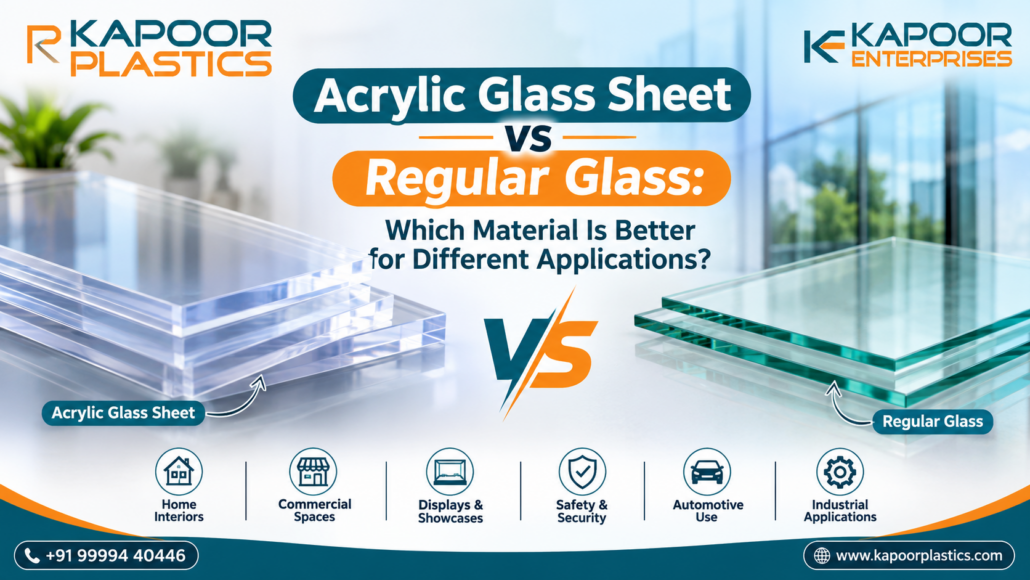
Acrylic Glass Sheet vs Regular Glass: Which Material Is Better for Different Applications?
When choosing a transparent material for construction, interiors, signage, or industrial applications, acrylic and regular glass are two popular options. Both materials offer excellent visibility and aesthetic appeal, but they differ in terms of weight, impact resistance, durability, and ease of fabrication. Understanding these differences can help you select the right material for your project.
An acrylic glass sheet is a lightweight, transparent plastic material made from Polymethyl Methacrylate (PMMA). It offers glass-like clarity with several practical advantages, making it a preferred choice across residential, commercial, and industrial applications.
What Is an Acrylic Glass Sheet?
An acrylic sheet is a transparent thermoplastic material commonly used as an alternative to traditional glass. It offers excellent light transmission, a smooth surface finish, and good weather resistance.
A high-quality transparent acrylic sheet can transmit more than 92% of visible light, providing excellent clarity for applications where visibility is important. It is also approximately 50% lighter than regular glass of comparable thickness, making transportation, handling, and installation easier.
These properties make acrylic suitable for applications such as display units, partitions, signage, protective covers, skylights, and furniture.
Acrylic Sheet vs Regular Glass: Key Differences
Although both materials offer transparency, their performance varies depending on the application.
- Weight and Handling
Acrylic sheets are significantly lighter than regular glass. This makes them easier to transport, cut, handle, and install. Glass, on the other hand, is heavier and generally requires more care during transportation and installation.
- Impact Resistance
Acrylic offers considerably higher impact resistance than standard float glass. It is less likely to shatter into sharp fragments when subjected to impact. However, tempered glass and specialised safety glass have different performance characteristics and should also be considered.
- Transparency and Appearance
Both materials provide excellent visibility. However, acrylic offers light transmission of over 92% in clear grades, making it suitable for displays, showcases, and applications requiring high optical clarity.
- Scratch Resistance
Regular glass generally has a harder surface and better scratch resistance than standard acrylic. Acrylic can develop scratches through rough handling or improper cleaning. However, scratches on acrylic can often be polished out, depending on their depth.
- Fabrication and Customisation
Acrylic is easier to cut, drill, machine, and thermoform into different shapes. This makes it useful for customised designs, decorative panels, and complex display structures. Glass usually requires specialised tools and processing techniques.
Where Are Acrylic Sheets Better Than Regular Glass?
An acrylic sheet can be a practical alternative to glass in applications where lightweight construction, impact resistance, and design flexibility are important.
Common applications include:
- Retail Displays and Showcases: Provides clear visibility for displaying products in shops, showrooms, and commercial spaces.
- Office Partitions: Creates modern transparent partitions while allowing natural light to pass through.
- Signage and Advertising: Offers an attractive surface for illuminated signs, display boards, and promotional graphics.
- Furniture and Interiors: Used in tables, decorative panels, shelves, and contemporary furniture designs.
- Industrial Applications: Suitable for machine covers, protective enclosures, and viewing panels.
- Architecture: Used in skylights, canopies, glazing, and selected outdoor installations.
When Should You Choose Regular Glass Instead?
Despite its advantages, acrylic is not always the right replacement for glass. Regular or specialised glass may be more suitable when an application requires higher surface hardness, greater heat resistance, or specific fire-rated performance.
Glass is commonly preferred for applications involving high temperatures, scratch-prone surfaces, and certain architectural glazing requirements.
Similarly, for applications requiring very high impact resistance, polycarbonate may be a better option than both standard acrylic and regular glass.
How to Choose the Right Acrylic Sheet?
Before purchasing, consider the following factors:
- Thickness: Select the thickness according to panel dimensions, support conditions, and application requirements.
- Transparency: Choose clear sheets when maximum visibility is required.
- Finish: Consider coloured, frosted, or transparent finishes based on design requirements.
- Application: Identify whether the material will be used indoors, outdoors, or in an industrial environment.
- Quality: Choose branded materials with consistent specifications and reliable performance.
Where to Find a Reliable Acrylic Sheet Supplier?
Selecting the right material is only one part of the process. Working with an experienced acrylic sheet supplier also helps ensure product quality, suitable specifications, and reliable availability.
Kapoor Plastics offers premium PLEXIGLAS® acrylic sheets for residential, commercial, architectural, and industrial applications. With over four decades of experience in the plastics industry, the company provides different acrylic sheet options along with product guidance to help customers select suitable materials.
Whether you need a transparent acrylic sheet for displays, partitions, signage, or industrial applications, Kapoor Plastics can help you find the right solution.
Explore the acrylic sheet range at Kapoor Plastics and contact the team to discuss your product requirements.