
Why High-Quality Acrylic Products Are Essential for Long-Term Performance and Durability
When choosing materials for construction, manufacturing, retail displays, interiors, or industrial applications, durability should always be a priority. Acrylic has become a popular alternative to glass because it combines strength, versatility, visual appeal, and relatively low weight. However, not all acrylic products deliver the same level of performance. The quality of the material, manufacturing process, and supplier can significantly influence how well an acrylic product performs over time.
Superior Strength and Durability
High-quality acrylic is engineered to withstand everyday wear while maintaining its structural integrity. Compared with conventional glass, acrylic is considerably lighter and offers excellent impact resistance, making it suitable for applications where safety and longevity matter. Working with a reliable acrylic supplier helps businesses source materials with consistent thickness, strength, clarity, and finish.
Quality acrylic products are also less likely to develop premature cracks, surface defects, or other issues when properly selected and installed. This makes them a practical choice for demanding environments where replacement can be costly or inconvenient.
Excellent Optical Clarity
One of acrylic’s most valuable characteristics is its exceptional transparency. Premium acrylic can provide excellent light transmission and a clean, polished appearance, making it ideal for signage, protective barriers, display cases, partitions, lighting applications, and architectural features.
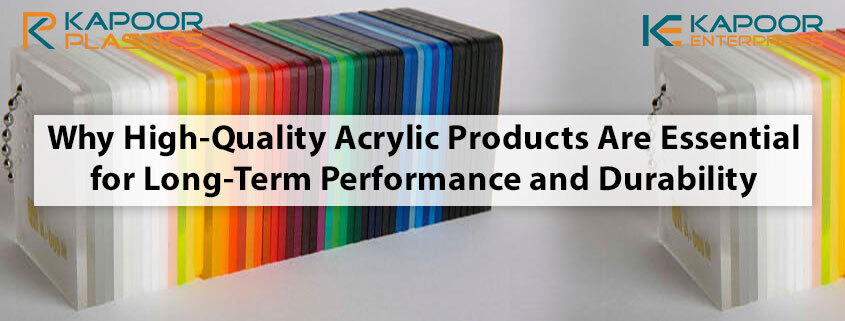
An experienced acrylic sheet supplier can provide different grades, thicknesses, colors, and finishes according to specific project requirements. Choosing the appropriate grade ensures that the finished product delivers both the desired appearance and the necessary functional performance.
Better Resistance to Environmental Factors
Acrylic products designed for long-term use can perform well under a variety of environmental conditions. Depending on the grade and application, acrylic can offer good resistance to moisture, weathering, and UV exposure. This makes it useful for both indoor and outdoor applications.
However, selecting the right material is essential. A top acrylic products supplier can help identify suitable specifications based on exposure, operating conditions, fabrication methods, and expected service life. Proper material selection can prevent unnecessary deterioration and extend the useful life of the finished product.
Cost Efficiency Over Time
The initial purchase price should not be the only consideration when selecting acrylic materials. Low-quality products may require frequent replacement, repairs, or additional maintenance, increasing total costs over time. High-quality acrylic, by contrast, can provide dependable performance and reduce the likelihood of premature replacement.
Businesses that partner with a dependable acrylic supplier can also benefit from consistent product quality, reliable specifications, and better support for repeat projects. Consistency is particularly important when large quantities of acrylic components must match in appearance and performance.
Choosing the Right Supplier
Ultimately, product quality begins with choosing the right source. A reputable acrylic material supplier should be able to provide appropriate product specifications, customization options, quality assurance, and dependable supply. Businesses should consider factors such as material grade, thickness, transparency, surface finish, dimensional accuracy, and application requirements before making a purchase.
Investing in high-quality acrylic products is therefore an investment in long-term performance. Whether used for commercial displays, architectural installations, industrial components, or protective applications, properly selected acrylic can provide an effective combination of durability, appearance, and versatility. With the right supplier and material specifications, businesses can achieve reliable results while reducing long-term maintenance and replacement concerns.
Leave a Reply
Want to join the discussion?Feel free to contribute!